Quick Answer: Patong offers remote workers an unbeatable combination of mountain coworking spaces with 200+ Mbps WiFi, pristine beaches just 15 minutes away, ethical wildlife experiences, island-hopping adventures, and authentic Thai cuisine, which costs 40-60% lower than in Western countries.
Picture this: you’re wrapping up a client call with perfect WiFi, looking out at panoramic views of Patong Bay, surrounded by lush jungle. An hour later, you’re watching the sunset from the beach with a fresh coconut in hand. This isn’t a fantasy, it’s just another Tuesday for remote workers in Patong, Phuket.
If you’ve been searching for the perfect digital nomad destination that combines serious productivity with calm relaxation, let me tell you why Patong should be at the top of your list.
Why Patong Has Become a Digital Nomad Magnet
Patong isn’t just another beach town on the tourist trail in Thailand. Over the past few years, it’s evolved into one of Southeast Asia’s most compelling remote work destinations, and here’s why:
The internet infrastructure is genuinely impressive—we’re talking fiber connections that rival what you’d find in Singapore or Tokyo. The cost of living remains refreshingly affordable despite Patong’s popularity. And perhaps most importantly, there’s a thriving community of digital nomads and remote workers who actually get the lifestyle.
But what really sets Patong apart? It’s the proximity to nature. Unlike working from a sterile city apartment, here you can literally take a 15-minute break and be standing on white sand beaches. That’s the kind of work-life integration that keeps remote workers productive and mentally healthy.
Where to Actually Work in Patong (This Matters More Than You Think)
Let’s be honest: not all coworking spaces are created equal. I’ve worked from “coworking” spots that were basically cramped internet cafes with bad coffee and worse WiFi. That’s not what you’ll find at the best coworking spaces in Phuket.
Denz Coworking Café: The Mountain Workspace That Changed Everything
Located in the tranquil mountains between Kathu and Patong, Denz Coworking Café has become something of a legend among remote workers in Thailand. And after spending time there, I understand why.
What makes it different?
First, the location. While most coworking spaces fight for cramped downtown real estate, Denz sits perched on the mountainside with sweeping views of Patong Bay. It’s the kind of vista that makes Zoom backgrounds unnecessary; your colleagues will see your actual view and immediately book their flights to Thailand.
The WiFi consistently clocks over 200 Mbps (I’ve tested it during peak hours). For reference, that’s faster than what most people have in their home offices in the US or Europe. Video calls are crystal clear, large file uploads happen in seconds, and you’ll never experience that dreaded connection drop mid-presentation.
But here’s what really sold me: they actually understand what remote workers need. Multiple power outlets at every station (because we all have three devices running simultaneously). Comfortable ergonomic seating that doesn’t destroy your back during an eight-hour work session. Both indoor air-conditioned areas and outdoor spaces with natural ventilation. And a community of other serious professionals.
The unexpected bonus? Five resident French bulldogs who’ve become semi-famous in remote work circles. They’re the antidote to screen fatigue you didn’t know you needed.
Check out their flexible pricing options that accommodate everything from daily drop-ins to monthly memberships. Spoiler: it’s probably less than what you’re paying for coffee shop WiFi back home.
If you need dedicated focus time, their private office space offers air-conditioned isolation with all the same amenities. Perfect for those days when you’ve got back-to-back client calls or need to hammer out a critical deadline.
Beach Breaks That Won’t Destroy Your Productivity
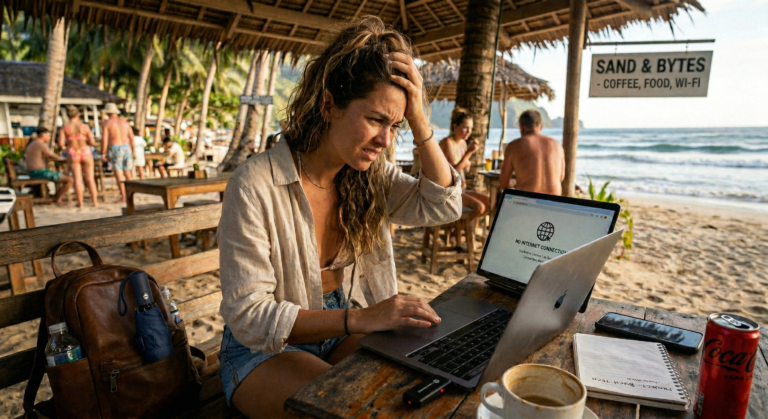
One of the biggest lies about tropical remote work destinations? “You can work from the beach!” No. You cannot. Sand in your laptop, screen glare making everything unreadable, and WiFi that barely loads email—it’s a disaster.
But here’s what does work: strategic beach breaks between work blocks.
Patong Beach: Your After-Work Decompression Zone
Patong Beach is a 3-kilometer crescent of white sand that’s consistently ranked among Phuket’s top beaches. My routine became this: finish work around 5 PM, quick scooter ride down the mountain (10 minutes), and arrive just as the afternoon heat breaks and the beach transforms into sunset viewing paradise.
The beachfront is lined with restaurants where you can grab dinner with your toes in the sand.
Pro tip: hit up the northern end after 6 PM for fewer crowds and better sunset views.
Freedom Beach: The Hidden Gem for Reading and Thinking
When you need proper solitude (because even extroverts need alone time), Freedom Beach delivers. It’s less accessible (you’ll need to take a longtail boat or navigate a fairly steep jungle path) which naturally filters out the party crowd.
I’d grab a book or my Kindle, spend a few hours letting my brain process the week’s work, and return feeling genuinely recharged. It’s the kind of mental reset that’s impossible to achieve in a busy city.
Beyond Beaches: The Elephant Sanctuary Everyone Should Visit
Here’s where Patong gets really special. Just 20 minutes away sits the Kathu Elephant Sanctuary, one of Thailand’s leading ethical elephant retirement homes.
Unlike the tourist traps where elephants perform tricks or give rides (please never support those), this sanctuary focuses entirely on conservation and the wellbeing of rescued elephants. You’ll spend 3-4 hours learning about elephant conservation, feeding them (they eat SO much fruit), and yes, helping bathe them in a natural pool.
Why am I emphasizing this in a remote work guide? Because working remotely isn’t just about productivity metrics, it’s about building a life with meaningful experiences. This is one of those experiences that reminds you why you chose location independence in the first place.
Book ahead through their official website or ask at Denz, the owners have relationships with the good ethical operators and can point you in the right direction.
The Hidden Productivity Hack: Movie Matinees
This sounds weird, but hear me out. Some of my most productive work days happened because I took a two-hour break to watch a movie.
Both Jungceylon Mall and Central Patong have genuinely nice cinemas with VIP seating (think: reclining leather chairs, blankets, the works). Tickets run about ฿200-400 ($6-11 USD), and the afternoon matinee slots are usually empty.
After four straight hours of client calls or intense coding, your brain needs a hard reset. A movie provides that far better than scrolling Twitter or checking email for the hundredth time. You emerge with actual perspective and energy instead of just more digital fatigue.
Plus, Thai cinemas are an experience. Everyone stands for the royal anthem before the film, and the concession stands have actual food, not just popcorn. It’s one of those small cultural differences that makes living abroad interesting.
Eating in Patong: The Real Talk
Let’s discuss food, because this genuinely affects your quality of life as a remote worker. You’re not on vacation—you’re living here, which means you need sustainable, affordable, healthy food options.
The Thai Food Advantage
Authentic Thai food in Patong is both delicious and genuinely affordable. I’m talking ฿60-120 ($2-4) for street food that would cost $15-20 back in the US or Europe.
Must-try dishes that became my regular rotation:
- Pad Thai from the street vendors on Bangla Road (yes, the party street also has great daytime food). Ask them to adjust the spice level—”pet nit noi” means a little spicy, which is usually plenty for foreign palates.
- Green Curry at basically any local restaurant. The mom-and-pop places near the coworking area serve massive portions with rice for ฿120-180. That’s lunch and dinner sorted.
- Seafood at places like Laem Singh Restaurant. Splurge a bit here (฿300-500) and you’ll get platters that rival expensive restaurants back home.
The practical strategy: I’d eat Thai food for most meals to keep costs down, then occasionally splurge on Western food when I desperately needed a burger or pizza. This kept my food budget around ฿10,000-15,000 ($280-420) per month while eating very well.
Pro remote worker tip: Download Grab (Thailand’s version of Uber Eats) and Foodpanda. Both deliver to Denz and most accommodations in Patong. When you’re deep in a project and can’t break for food, delivery becomes essential. Most meals arrive in 30-45 minutes.
Island-Hopping Without Destroying Your Work Schedule
One massive advantage of Patong’s location: you’re the jumping-off point for some of Southeast Asia’s most spectacular islands.
Strategic Weekend Adventures
The key is treating these as actual weekend trips, not weekday distractions. Here’s what works:
Phi Phi Islands (฿1,200-2,000): The Instagram-famous limestone cliffs and turquoise lagoons everyone dreams about. Book a full-day tour that picks you up around 7 AM and returns by 6 PM. Yes, it’s touristy, but it’s touristy for good reasons.
Coral Island (฿800-1,500): Only 9km from Phuket, this is perfect for a half-day Saturday trip when you need a quick mental reset but still want to get some work done in the afternoon.
Similan Islands (฿2,500-4,000): Only accessible October through May, these islands offer some of the best diving in the world. This is a full-day commitment, but if you’re into underwater photography or diving, it’s worth clearing your calendar for.
Booking tip: Don’t book through your hotel or random street operators. Use Viator or GetYourGuide for properly vetted tours with good reviews. The few extra dollars save you from overcrowded boats and sketchy operators.
Bangla Road: Do You Actually Need to Go?
Let’s address the elephant in the room (pun intended after the sanctuary section). Bangla Road is Patong’s infamous nightlife street—the reason Patong has a reputation as a party destination.
The short answer: You should probably experience it once, but it’s not essential to the remote worker lifestyle.
Bangla Road essentially transforms from a regular street into a pedestrian party zone every evening from 6 PM to 2 AM. It’s loud, chaotic, neon-lit, and filled with bars, clubs, and entertainment venues of… varying types.
If you’re curious: Walk through early evening (6-7 PM) before it gets completely crazy. You’ll get the atmosphere and cultural experience without the overwhelming crowds and aggressive drink promoters.
If nightlife isn’t your thing: Completely skip it. Patong has plenty of chill beach bars and restaurants where you can have a civilized drink while watching the sunset. The Denz community often organizes casual evening hangouts that are much more conducive to actual conversation than screaming over club music.
The Real Cost of Living and Working in Patong
Numbers. Let’s talk actual numbers, because “affordable” means different things to different people.
Monthly Budget Breakdown for Remote Workers
Accommodation:
- Budget: ฿8,000-15,000 ($225-420) for a basic studio near Patong
- Mid-range: ฿15,000-30,000 ($420-840) for a nice one-bedroom with a pool
- Luxury: ฿30,000-50,000+ ($840-1,400+) for beachfront or premium locations
Coworking:
- Daily passes at Denz: varies by package
- Monthly memberships: ฿3,000-12,000 ($85-340) depending on your needs
- Private office options: higher but offer dedicated space
Food:
- Budget (mostly local Thai): ฿6,000-10,000 ($170-280)
- Balanced (mix of local and Western): ฿10,000-20,000 ($280-560)
- Splurge (regular Western food, nice restaurants): ฿20,000-30,000+ ($560-840+)
Transportation:
- Scooter rental: ฿2,500-4,000/month ($70-110)
- Grab rides: ฿2,000-3,000/month if you don’t rent ($55-85)
- Fuel: ฿1,000-1,500/month ($30-40)
Total realistic budget: ฿25,000-60,000 ($700-1,680) per month, depending on lifestyle choices.
For comparison, that’s less than most people pay just for rent in major US or European cities. And you’re getting beach access, tropical weather, amazing food, and a genuine community.
Practical FAQ: The Questions Everyone Actually Asks
Is the WiFi really fast enough for video calls?
Yes, genuinely yes. At established spots like Denz, you’re looking at 100-300 Mbps fiber. I’ve done multiple daily Zoom calls without issues. The infrastructure in Patong has improved dramatically in the past 3-4 years.
What about the language barrier?
English is widely spoken in Patong, especially in tourist/expat areas. Learning basic Thai phrases (hello, thank you, how much) helps, but you won’t struggle with daily tasks. The Denz staff speaks excellent English, and most accommodation hosts cater to international residents.
Can I actually focus with all the tourist activity?
This is why location matters. Denz sits in the mountains between Patong and Kathu—you get the benefits of Patong’s infrastructure without the beach tourist chaos. The coworking environment attracts serious professionals, not party backpackers.
What’s the best time of year to be there?
November through April is peak season (dry, perfect weather, but more expensive and crowded). May through October is monsoon season (more rain, fewer tourists, better deals). I actually prefer shoulder season (late October, early May) for the sweet spot of good weather and reasonable prices.
For detailed seasonal planning, check out the official Tourism Authority of Thailand guide.
Is it safe for solo remote workers?
Generally very safe. Standard precautions apply (don’t leave valuables on the beach, use registered taxis or Grab, be smart about walking alone late at night). Patong has a visible police presence, and there’s a large expat community looking out for each other.
How do I handle the visa situation?
This deserves a longer discussion, but briefly: Thai visa options range from visa-exempt entries (30-60 days depending on nationality) to tourist visas (60 days plus 30-day extension) to the newer DTV (Digital Nomad) visa. Many remote workers do visa runs to neighboring countries or work with visa agents. Do your research based on your nationality and intended length of stay.
Making Patong Work for Your Remote Career
Here’s what nobody tells you about remote work destinations: the honeymoon phase lasts about two weeks. After that, the success of your experience depends entirely on whether you’ve built sustainable routines.
Patong works because it supports sustainable remote work routines. You’re not constantly fighting infrastructure issues (dodgy WiFi, power cuts, uncomfortable workspaces). You’re not isolated from other professionals. And you have enough variety in activities that you don’t get bored but not so much temptation that you stop working entirely.
The coworking community at Denz becomes your professional network: people who understand deadline stress, time zone challenges, and the weird guilt that sometimes comes with working from paradise. These relationships often turn into collaborations, referrals, or just having someone who gets it when you need to vent about a difficult client.
Your Next Steps: Actually Making This Happen
If you’ve read this far, you’re seriously considering Patong. Here’s the practical plan:
1. Accommodation: Browse Airbnb or Booking.com for monthly rentals. Look for places in the Kathu-Patong border area for quiet but still convenient access to everything.
2. Workspace: Visit Denz’s website to understand their pricing and membership options. If you’re testing Patong for a month, start with a monthly membership rather than daily rates.
3. Logistics: Get a Thai SIM card at the airport (AIS and True are the major providers). Download Grab for transportation and food delivery. Join the “Digital Nomads Phuket” Facebook group for real-time community advice.
4. Planning: Check the Phuket travel guides for updated information on everything from the best time to visit to local customs.
Patong isn’t just another beach destination with decent WiFi. It’s a place where productivity and paradise actually coexist—where you can crush your work goals in the morning and watch the sunset from a beach in the evening. Where your monthly living costs are less than your old city rent alone. Where you can be part of a growing community of professionals who’ve figured out that location independence doesn’t mean compromising on work quality.
The question isn’t whether Patong works for remote workers. It’s whether you’re ready to finally experience what sustainable remote work actually looks like.
Ready to experience Patong’s remote work lifestyle? Visit Denz Coworking Café and discover why digital nomads are choosing Patong Bay views over another gray cubicle.