We are closed and will be back open on the 5th October 2026



✏ Last Updated: March 19, 2026 | This guide reflects current DTV regulations as of March 2026. Visa rules change — always verify with the official Thai Embassy or thaievisa.go.th before applying.
| Detail | 2026 Requirement |
|---|---|
| Visa Validity | 5 years, multiple-entry |
| Stay per Entry | 180 days (extendable once for another 180 days = up to 360 days continuous) |
| Visa Fee | ฿10,000 (~$275 USD) standard — varies slightly by country |
| Financial Requirement | ฿500,000 (~$14,500 USD) in savings — must show 3–6 months of bank statements |
| Processing Time | 5–15 business days |
| Apply Via | thaievisa.go.th — must apply from OUTSIDE Thailand |
| Health Insurance | Required — minimum $50,000 coverage (SafetyWing ~$45/month accepted by most consulates) |
| Work Rights | Remote work for foreign employers only — Thai work permit NOT included |
| Minimum Age | 20 years old (under 20 may apply as dependants only) |
| Dependants | Legal spouse and unmarried children under 20 — each applies separately |
Thailand has established itself as a premier destination for digital nomads and remote workers, offering a unique combination of affordable living costs, modern infrastructure, and tropical climate. In July 2024, the Thai government formalized this appeal by launching the Destination Thailand Visa (DTV), a long-term visa option specifically designed for remote workers, freelancers, and individuals participating in Thai cultural activities.
Table of Contents
This comprehensive guide covers all aspects of the DTV, including eligibility requirements, application procedures, costs, tax implications, and practical considerations for living and working in Thailand under this visa category.
The Destination Thailand Visa is a multiple-entry visa valid for five years, allowing holders to stay in Thailand for up to 180 days per entry. Launched in mid-2024, the DTV addresses the growing global trend of remote work by providing legal residency status for individuals who work for foreign companies or participate in approved cultural activities.
The visa offers significant flexibility compared to traditional tourist visas. Each 180-day stay can be extended for an additional 180 days, enabling visa holders to remain in Thailand for up to 360 consecutive days before needing to exit and re-enter the country. The initial visa application costs 10,000 Thai Baht (approximately $280-300 USD), with extensions costing 1,900 THB per occurrence.
The DTV isn’t the only option for long-term stays in Thailand. Here’s how it stacks up against the main alternatives:
| Feature | DTV | Tourist Visa / Exemption | LTR Visa | Thailand Privilege |
|---|---|---|---|---|
| Best For | Remote workers, digital nomads | Short trips, tourists | High-income professionals | Long-term tourists / retirees |
| Validity | 5 years | 60–90 days | 10 years | 5–20 years |
| Stay Per Entry | 180 days + 180 day extension | 30–90 days | Uninterrupted 10 years | Flexible |
| Cost | ฿10,000 (~$275) | Free – $40 USD | ~$3,000–$10,000+ | ฿600,000+ (~$17,000+) |
| Min Income / Savings | ฿500,000 savings | None typically | $80,000/year income | None (pay the fee) |
| Remote Work Allowed | Yes (foreign employers only) | Grey area / no | Yes (specific categories) | No (tourist-type visa) |
| Dependants | Yes — apply separately | No | Yes — included | Yes — extra cost |
| Tax Benefits | No | No | Yes — foreign income exempt | No |
| Border Runs Needed | Exit once every 360 days (max) | Every 60–90 days | No | Once a year |
Bottom line: For most remote workers and digital nomads, the DTV is the best value visa Thailand has ever offered. The LTR is better if you earn above $80,000/year and want tax benefits. The Thailand Privilege Visa suits people who want VIP services and don’t need to work.

The DTV accommodates several categories of applicants:
Remote Employees: Individuals employed by companies registered outside Thailand who perform their work duties remotely. This includes employees in technology, marketing, consulting, finance, and other industries where physical presence at a specific office location is not required.
Freelancers: Independent contractors providing services to foreign clients. Eligible professions include web development, graphic design, content writing, photography, translation, and other location-independent work.
Business Owners: Entrepreneurs operating companies registered outside Thailand. This includes e-commerce businesses, digital agencies, online coaching services, and software-as-a-service (SaaS) companies.
Digital Content Creators: Individuals generating income through online content creation, including YouTubers, podcasters, and social media influencers with demonstrable business operations and revenue streams.
Thai Soft Power Activities: Individuals participating in approved cultural, educational, or wellness activities, including Muay Thai training, Thai cooking courses, medical treatments, sports training, seminars, and cultural festivals.
Important Limitation: The DTV prohibits employment with Thai companies or providing services to Thai clients. Individuals seeking to work in the Thai market must obtain a Non-Immigrant B visa with an appropriate work permit.
Financial Requirements:
Applicants must demonstrate financial stability through bank statements showing a minimum balance of 500,000 Thai Baht (approximately $14,000-15,000 USD). This balance must be maintained consistently for the previous 3-6 months, depending on the specific Thai embassy’s requirements.
Embassy officials verify financial documentation to ensure applicants can support themselves without becoming a burden on Thai social services. Sudden large deposits immediately before application submission may raise concerns about the legitimacy of available funds.
Employment Documentation:
The required employment proof varies by applicant category:
For Remote Employees:
For Freelancers:
For Business Owners:
For Thai Soft Power Activities:
The DTV is available to nationals of most countries worldwide. Applications require a valid passport with at least six months remaining validity from the intended travel date and a minimum of two blank pages for visa stamps.
Certain nationalities, including Afghanistan, Iraq, and North Korea, face additional scrutiny and documentation requirements. Some Thai embassies also report that applications from specific countries may encounter more stringent approval processes.
Critical Requirement: DTV applications cannot be submitted while physically present in Thailand. Applicants must exit the country before initiating the application process.
Two primary application methods exist:
1. Online Application via Thai e-Visa Portal
The Thai e-Visa system enables remote submission of applications and supporting documents. Processing typically requires 5-15 business days, though timelines vary by embassy workload and application complexity. The online system allows applications from anywhere outside Thailand without requiring embassy visits.
2. In-Person Application at Thai Embassy or Consulate
Physical submission at Thai diplomatic missions remains available, particularly beneficial for applicants with complex documentation or those preferring face-to-face consultation. Most embassies and consulates prioritize applications from residents of their jurisdiction, requiring proof of legal residence such as residence permits or long-term visas for non-citizens.
Applications submitted through embassies in the applicant’s home country generally experience smoother processing and higher approval rates.
Core Documentation:
Remote Employee Documentation:
Freelancer Documentation:
Business Owner Documentation:
Thai Soft Power Participant Documentation:
Individual Thai embassies may request additional documentation beyond these baseline requirements. Verification of specific requirements with the intended application location is recommended before submission.
Application forms require consistent information across all submitted documents. Discrepancies between addresses, employment details, or personal information across different documents may trigger additional scrutiny or rejection.
Documentation should accurately represent the applicant’s situation without exaggeration or misrepresentation. Immigration officers possess extensive experience in identifying inconsistencies or fraudulent information.
All documents should be high-quality scans or photographs with clear, readable text. Blurry images, partial screenshots, or incomplete documents may result in application rejection without opportunity for correction.
Online applications through the e-visa portal are typically processed within 5-15 business days. In-person embassy submissions may process faster, with some applicants reporting approval within 3-5 days, though this varies significantly by location and application volume.
Approved applications receive electronic confirmation via email. The visa is registered in the Thai immigration system, visible to border officials upon entry. Successful applicants receive an initial 180-day entry stamp upon arrival in Thailand.
Rejected applications result in forfeiture of the 10,000 THB application fee, which is non-refundable. Many applicants utilize visa consultancy services to review documentation before submission, reducing rejection risk.
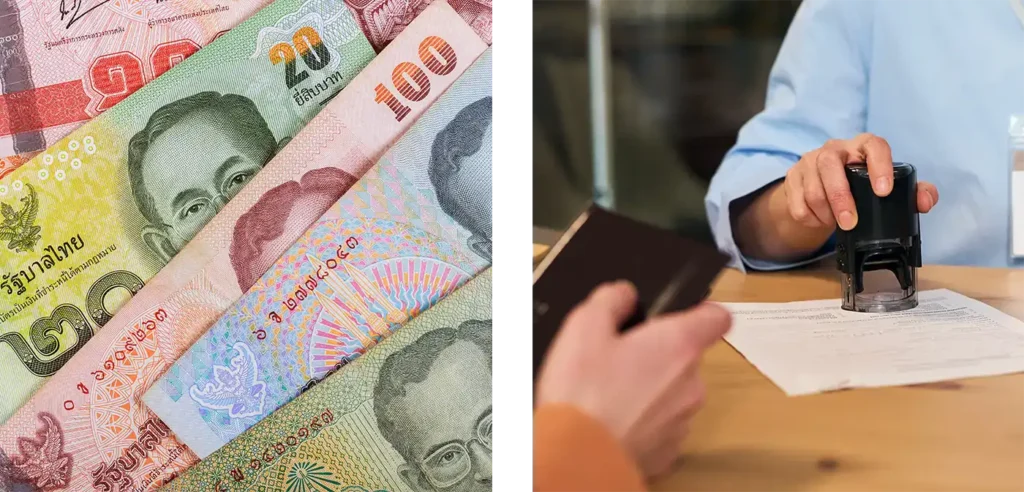
The base application fee is 10,000 Thai Baht (approximately $280-300 USD). Individual Thai embassies and consulates may charge different amounts based on local currency exchange rates and processing costs:
Visa extensions cost 1,900 THB (approximately $50-55 USD) for each additional 180-day period.
Document Authentication: Notarization and authentication of employment contracts or business documents typically costs $50-200 USD, depending on jurisdiction and document complexity.
Document Translation: Certified translation of non-English documents into English or Thai ranges from $50-150 per document.
Travel Insurance: While not mandatory for DTV applications, comprehensive annual coverage typically costs $300-1,500 USD depending on age, coverage level, and pre-existing conditions.
Visa Consultant Services: Professional application assistance ranges from $500-1,500 USD but may prevent costly application errors and rejections.
Travel Expenses: Costs associated with exiting Thailand to submit applications, including flights, accommodation, and associated expenses.
Bank Documentation: Some financial institutions charge fees for certified bank statements required by certain embassies.
Total application costs typically range from $400-800 USD for straightforward cases to $1,000-2,500 USD for complex applications requiring professional assistance or extensive documentation preparation.
Disclaimer: The costs outlined above are estimates only and are provided for general planning purposes. Actual expenses may differ based on your nationality, location, timing of your application, and the specific requirements of the Thai embassy or consulate handling your case. Fees for document authentication, translation, banking services, travel, insurance, and professional assistance can also change without prior notice. Applicants should verify all current requirements and pricing directly with the relevant Thai authorities, service providers, or accredited visa professionals before proceeding with their application.
The five-year validity period with 180-day entries (extendable to 360 days) provides substantial flexibility for remote workers. Unlike short-term tourist visas requiring frequent extensions or border crossings, the DTV enables extended stays with minimal administrative burden.
The multiple-entry structure allows unrestricted travel in and out of Thailand. Each re-entry resets the 180-day stay period, facilitating regional travel while maintaining Thai residency as a base.
The DTV provides legal authorization for remote work activities, eliminating concerns about immigration violations associated with working on tourist visas. Visa holders can openly discuss their professional activities, network with other professionals, and focus on work without legal uncertainties.
Critical Limitation: The DTV authorizes only remote work for foreign employers and foreign clients. Any work involving Thai companies or Thai clients requires a separate Non-Immigrant B visa with a work permit. Immigration authorities enforce this distinction strictly, with violations potentially resulting in deportation and future visa bans.
The DTV is classified as a tourist visa category, meaning visa ownership alone does not create Thai tax residency. However, individuals spending 180 days or more in Thailand during a calendar year may become tax residents under Thai law.
Thai tax residents are liable for taxes on foreign income brought into Thailand during the same tax year it was earned. Many remote workers manage tax exposure through:
The Thai Revenue Department provides information on tax obligations, though professional tax consultation is recommended for complex situations.
U.S. Citizens: American taxpayers remain subject to U.S. tax on worldwide income regardless of residence location. The DTV does not affect U.S. tax obligations, though taxpayers may qualify for the Foreign Earned Income Exclusion or Foreign Tax Credit.
Spouses and children under 20 years old qualify for dependent DTV visas. Each family member submits an individual application with separate fees, requiring:
Some embassies require demonstration of financial resources sufficient to support dependents, though requirements vary by location.
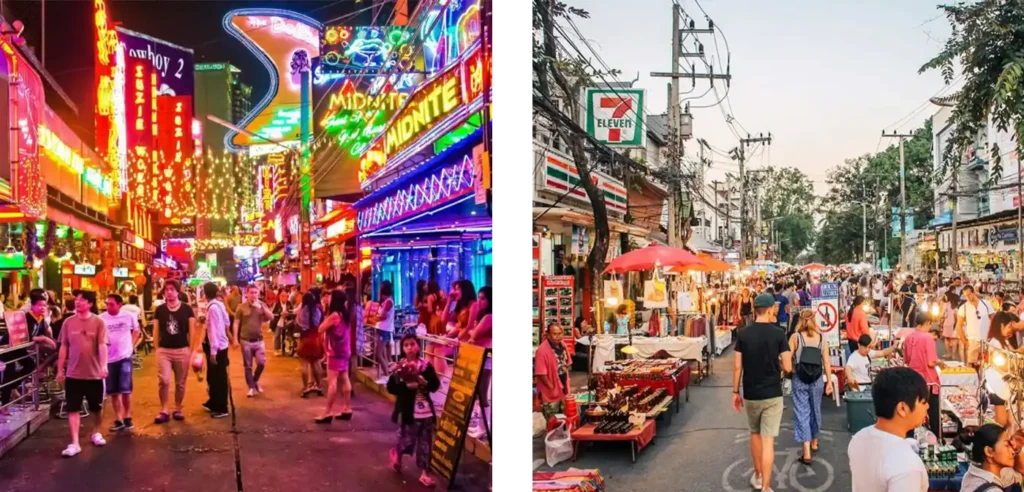
Most DTV guides focus on Bangkok or Chiang Mai. But Phuket — particularly the Patong area — is quietly one of the strongest bases for remote workers in Southeast Asia. Here’s why it works:
The hilltop area above Patong has a growing cluster of coworking and remote-work-friendly venues. If you’re working on the DTV and based in Patong, your options include everything from open hot-desks and private offices to café-style work environments with views of Patong Bay.
Denz Coworking Café sits on the hillside above Patong with panoramic bay views, high-speed fibre Wi-Fi, private office pods, and an on-site café — making it one of the most popular options for DTV holders working remotely in the area. Day passes, weekly, and monthly rates available.
Online communities: Phuket Digital Nomads, Phuket Expats Facebook groups, and Meetup.com events
Phuket has an active expat and digital nomad community — networking events, meetups, and business groups run year-round
The island hosts tech and startup events, particularly during peak season (November–March)
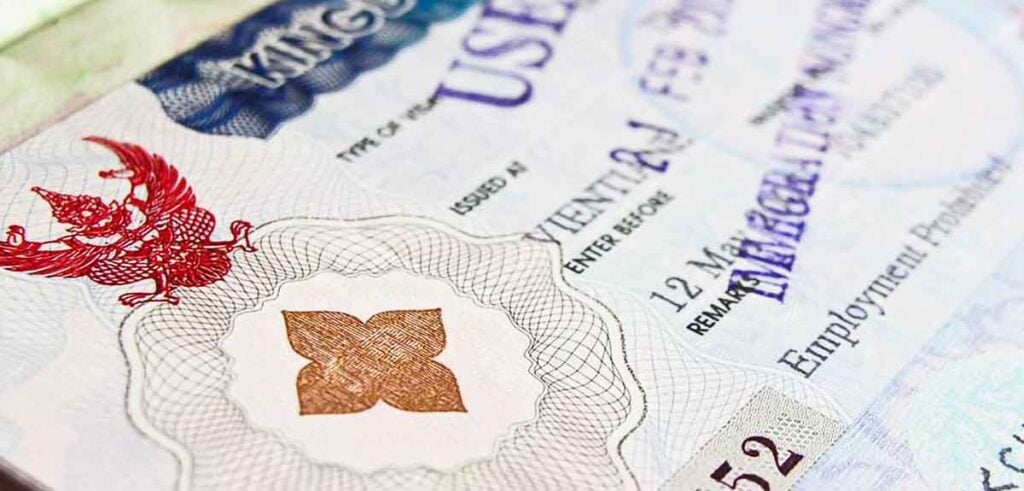
Extensions add 180 days to existing stays without requiring departure from Thailand:
Location: Local immigration offices handle extensions. Bangkok’s main Immigration Bureau is located in Chaeng Watthana. Provincial offices typically experience lower volume and shorter wait times.
Required Documentation:
Processing: Most extensions are approved same-day or within several business days. Extensions add 180 days from the current stamp date, enabling stays of up to 360 consecutive days.
Each extension utilizes one permitted extension per entry. After 360 days, departure and re-entry are required for a new 180-day stamp.
All long-term foreign residents must report their current address to Thai immigration every 90 consecutive days. This administrative requirement applies regardless of visa type and is distinct from visa extensions.
Reporting options include:
Failure to complete 90-day reporting results in fines of 2,000 THB. While this constitutes an administrative violation rather than a visa breach, consistent compliance is recommended.
Transitioning from DTV to alternative visa categories requires DTV cancellation and departure from Thailand. In-country visa conversions are generally not permitted.
Common transitions include:
Each visa category has distinct requirements and application procedures requiring separate research and preparation.
Insufficient Financial Proof: Demonstrating 500,000 THB immediately before application is inadequate. Embassies require consistent balance maintenance for 3-6 months. Large deposits shortly before application raise authenticity concerns.
Inadequate Employment Documentation: Generic employment letters lacking specific remote work authorization are insufficient. Freelancers require actual contracts and invoices, not merely websites claiming freelance status.
Incorrect Embassy Jurisdiction: Applications at embassies where applicants lack legal residence frequently result in rejection. Non-residents require proof of legal stay (residence permits or long-term visas) in the application country.
Inconsistent Information: Discrepancies between employment contracts, bank statements, and passport information trigger embassy suspicion. All documentation should present coherent, consistent information.
Poor Document Quality: Unclear scans, partial screenshots, or incomplete documentation result in rejections rather than requests for clarification. High-quality scans or photographs are essential.
Early Preparation: Begin document gathering 2-3 months before the intended application. This allows time for obtaining proper employment letters, building bank balances, and securing document authentication.
Embassy Verification: Contact the specific Thai embassy before application to confirm requirements. Individual embassies maintain different standards for financial documentation, non-resident applications, and processing times.
Systematic Organization: Create clearly labeled folders (digital and physical) for all documents. Include checklists and review materials multiple times before submission.
Professional Consultation: Complex situations (self-employment without clear contracts, business ownership, previous visa issues) may benefit from professional consultant services costing $500-1,000 to avoid rejection and lost fees.
Contingency Planning: Develop backup plans for potential rejection or extended processing times. Ensure current visa status remains valid throughout the application period.
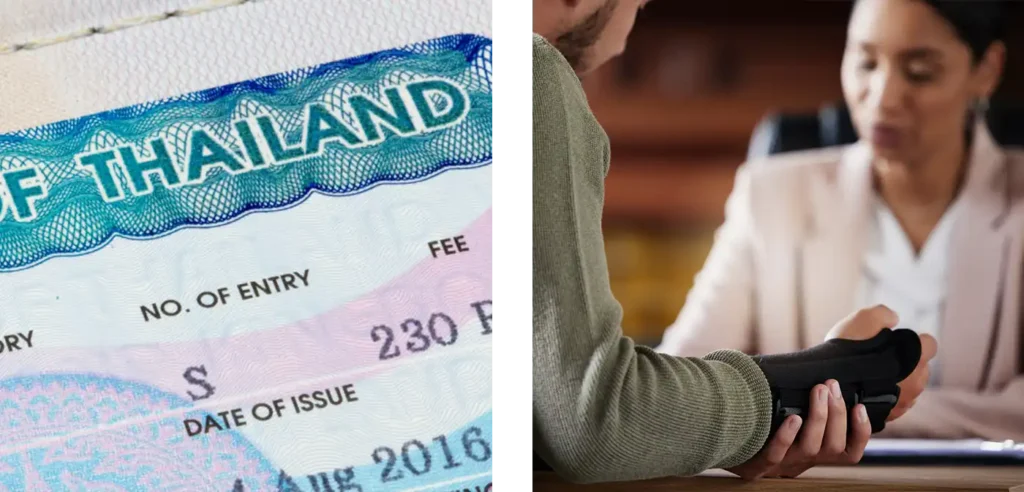
No. The DTV authorizes only remote work for foreign employers and foreign clients. Employment with Thai companies or providing services to Thai clients requires a Non-Immigrant B visa with a work permit.
Overstays incur fines of 500 THB per day, capped at 20,000 THB (40 days maximum). Overstays create immigration record issues affecting future visa applications. Extended overstays result in entry bans: 1 year (90 days overstay), 3 years (1 year+ overstay), 5 years (3 years+ overstay), or 10 years (5 years+ overstay).
No. All DTV applications must be submitted from outside Thailand. Applicants commonly travel to neighboring countries (Malaysia, Vietnam, Laos) or return to their home countries for application submission.
Yes. The 90-day address report is mandatory for all long-term foreign residents, separate from visa extensions. Reporting can be completed online, by mail, or in person. The process requires 10-15 minutes for an in-person submission.
Foreign business ownership in Thailand is possible, but working in that business requires a work permit. The DTV does not include work permit authorization. Business operations typically require Non-Immigrant B visas with appropriate permits. Legal consultation is recommended before establishing Thai business entities.
Tax obligations depend on days spent in Thailand and income structuring. Individuals staying less than 180 days annually are generally not considered tax residents. Those exceeding 180 days may become tax residents, potentially liable for Thai taxes on foreign income brought into Thailand during the year earned.
American citizens remain subject to U.S. taxation on worldwide income regardless of Thai tax status. Professional tax consultation covering both Thai and home country obligations is recommended.
Yes. The DTV is a multiple-entry visa valid for five years. Unlimited exits and entries are permitted. Each entry provides a new 180-day stamp.
Health insurance is not an official requirement at most embassies, though some may request it. Comprehensive health coverage is strongly recommended regardless of embassy requirements. Annual premiums typically cost $1,000-1,500 for healthy individuals.
The Destination Thailand Visa represents Thailand’s formal recognition of the global remote work trend, providing legal residency status for location-independent professionals. The visa offers significant advantages through its five-year validity, extended stay periods, and moderate cost structure.
The DTV is appropriate for:
Alternative visa categories may be more suitable for:
The DTV fills an important gap in Thailand’s visa ecosystem, providing accessible long-term residency for remote workers without requiring Thai employment or exceptional wealth. For individuals meeting the eligibility criteria and seeking to establish Thailand as their base for remote work, the DTV offers a practical and legally sound solution.
Remote workers considering Phuket as their base can explore professional workspace options such as Denz Coworking Café, which provides the infrastructure and environment necessary for productive remote work, combined with access to Thailand’s natural beauty and cultural richness.