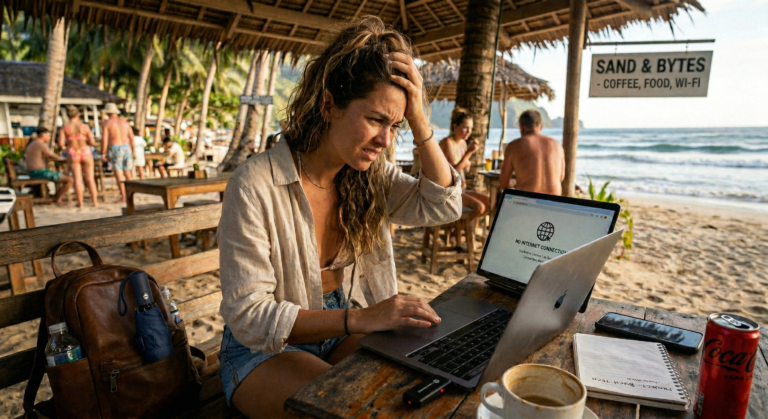

Working remotely in Phuket is one of those things that sounds better than it is on paper — until you actually do it, and realise it’s better than it sounds. The infrastructure is real, the cost of living is manageable, the weather is warm year-round, and the beach is twenty minutes from wherever you’re sitting. But it only works if you approach it properly.
Table of Contents
I built Denz Coworking Café on Patong Hill because I needed a proper place to work myself. Before that, I was the guy hunched over a dodgy connection in a coffee shop, buying a second iced americano I didn’t want just to justify another hour at the table. This guide is everything I wish someone had handed me in year one — sorted visa, reliable workspace, structured hours, and the freedom to actually enjoy the island you came to.
Whether you’re here for two weeks or two years, here’s what you actually need to know.
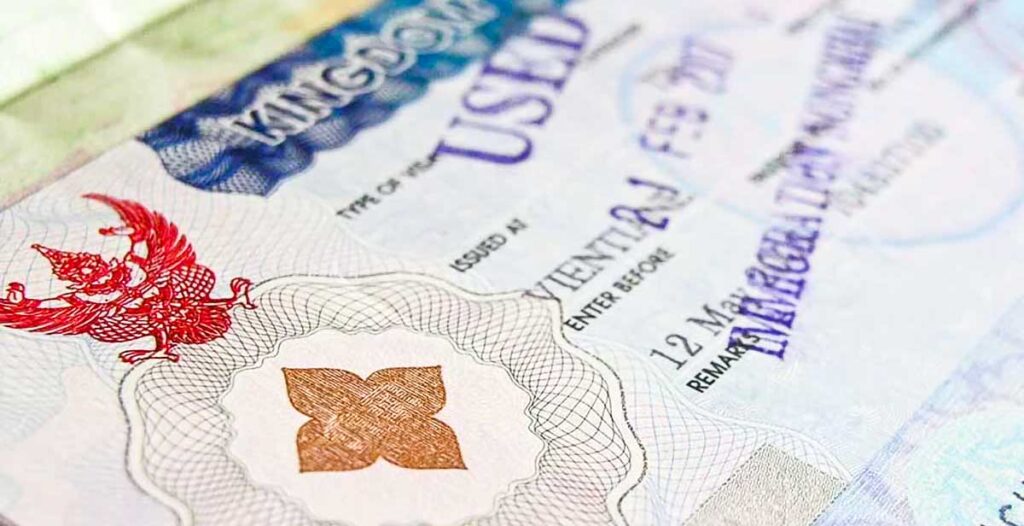
Before you worry about the best café to work from or how to handle a 7 am client call, you need to know you’re in the country legally and with enough time to actually settle in. Thailand has always been popular with remote workers, and the visa situation has genuinely improved in recent years.
The biggest shift in recent years has been the introduction of the Destination Thailand Visa (DTV). This is now the go-to option for digital nomads, freelancers, and remote workers who want to stay in Thailand for an extended period without the faff of constant border runs.
In short, the DTV gives you a five-year multiple-entry visa with each stay of up to 180 days. You apply before you arrive, it covers remote work, and it’s been a genuine improvement over the old tourist-visa-plus-overstay juggling act that everyone used to do. I’ve written a full breakdown in the Destination Thailand Visa complete guide — if you’re planning to stay longer than a standard tourist visa allows, go read that first. It covers eligibility, costs, the application process, and what the rules actually mean in practice.
If you’re just visiting for a few weeks, most nationalities get 30–60 days on a visa exemption at the border — no pre-application needed. You can extend once at a local immigration office for 1,900 THB. That gets most people through a proper workation without needing anything more complex. Just don’t overstay — it’s not worth it.
Thailand Visa Tip: If you’re genuinely working remotely for a non-Thai company, Thailand has tolerated this for years — but always check the current official rules at thai-visa.com or the Thai immigration website before you arrive. Rules change, and my advice today might be outdated by the time you read this.
This is the question I get asked most often, usually by someone sitting in a coffee shop with their laptop balanced on a wobbling table and a ceiling fan that keeps threatening to fall on them. Let me be direct about this.
Coworking is the right call for serious remote work. Not because coffee shops can’t be nice — they absolutely can — but because when you need reliable internet, a proper desk, air conditioning you can rely on, and a power socket that won’t trip the fuse, a coworking space just does the job better. We’ve actually gone deep on this comparison in the coworking vs. coffee shops in Phuket article if you want the full breakdown.
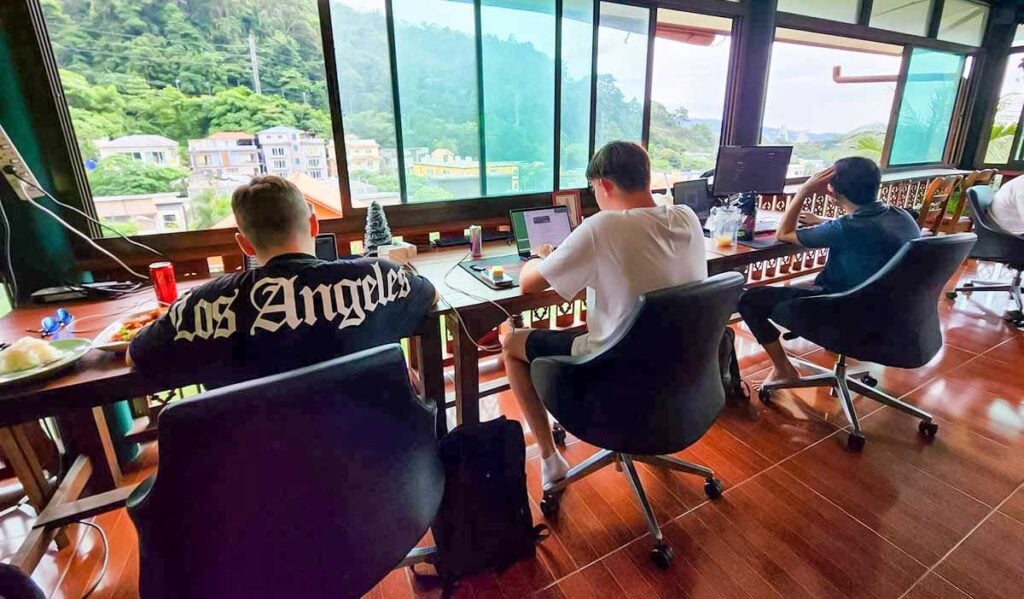
At Denz, we’re up on Patong Hill — which sounds dramatic but it’s about ten minutes from the beach. Panoramic views of Patong Bay, gigabit internet, standing desks, a proper café menu, and five French bulldogs wandering around making everyone’s day better. I’m obviously biased. But the reviews kind of back me up.
Check the Denz coworking prices page for current day pass, weekly, and monthly rates — it’s more affordable than most people expect for what you get. We also have a full breakdown of desk rental options if you’re trying to figure out which setup suits your working style best — hot desks, dedicated desks, or a private office.
I’m not going to pretend coffee shops don’t work — I met half my early Denz regulars because they were refugees from bad café WiFi. If you’re only doing light work, just need somewhere to answer emails for a couple of hours, or want a change of scenery for an afternoon, Phuket has some great options. Cherngtalay and Nai Harn have decent café culture. Patong town has options too.
The real problems: inconsistent internet speeds that drop the moment more than three people connect, noise levels you can’t control, tables that aren’t designed for full working days, and the unspoken pressure to keep buying things. For a morning session — fine. For a full workday with calls — don’t put yourself through it.
Thailand Tip #1: Always ask for the WiFi password before you sit down and order. Speed test it on your phone. If it’s under 20 Mbps, walk out politely and find somewhere else. Your deadline doesn’t care about the vibes.
Let’s talk about the thing that causes remote workers the most anxiety: the internet. The short version is that Phuket’s internet is genuinely solid now — better than most people expect and better than a lot of places in Southeast Asia — but it’s not without its complications.
At Denz we run gigabit fibre. The connection is tested, monitored, and we’ve invested properly in the infrastructure because a coworking space with unreliable internet is just an expensive café with bad chairs. We actually wrote about it in detail in the fastest WiFi in Phuket piece. If you’re working from a long-term rental, TRUE, AIS, and DTAC/NT all offer decent home fibre packages — 300–1,000 Mbps plans are widely available and reasonable on price.
Always have a local SIM with a data plan as your backup. AIS and TRUE are the most reliable carriers on the island. A 30-day unlimited data SIM runs around 300–600 THB, depending on the plan. I keep one on me at all times. When the internet at any fixed location hiccups, I hotspot from my phone and carry on. Non-negotiable if you have calls.
One thing Phuket — and Thailand generally — does occasionally deal with is submarine cable disruptions. These are rare but they happen, and when they do they can affect international internet speeds for days or weeks. It’s not a reason to avoid working here, but it’s worth knowing so you’re not blindsided. Keep local SIM data as a genuine backup, not a last resort.
Thailand Tip #2: Buy a SIM at the airport on arrival, not from a tout on the street. AIS and TRUE both have airport counters, the plans are clearly priced, and you’ll have connectivity before you even get in the taxi.
This is where most people either get Phuket completely right or completely wrong. The ones who get it wrong fall into one of two camps: they work exactly the same hours as they would at home and never actually experience the island, or they ‘go on holiday’ and find their output has collapsed within a week. Neither is a good outcome.
After eight years here and building a coworking space full of digital nomads, I’ve watched a lot of people figure this out — or not. Here’s what actually works.
Decide on your non-negotiable working hours and treat them as seriously as you would back home. For most people on European time zones, mornings work brilliantly — you’re 6–7 hours ahead, so you get a full productive morning before European colleagues are even online. Then your afternoons are genuinely free. That’s a quality of life upgrade that’s hard to overstate.
If you’re on US East Coast time, you’re looking at something like 8pm–2am for overlapping hours. That’s harder, but plenty of people do it. The Phuket night scene doesn’t hurt if you’re a night owl — and the daytime is entirely yours.
One of the best things about Phuket is that the best beaches, markets, and activities are right there. Use them. A 3pm finish at the coworking space and you can be at Kata Beach in 20 minutes. A morning surf session before the laptop opens at 10am is genuinely possible here. Build your day around that reality, not against it.
This is my actual advice to every person who comes through Denz looking a bit burned out. Take one day per week — a full day — and don’t look at the laptop at all. Go somewhere on the island you haven’t been. Drive up to the north. Go snorkelling off a longtail boat. Visit one of the local waterfalls. Phuket fatigue is real if you just work-eat-sleep from the same three locations. But it’s entirely avoidable.
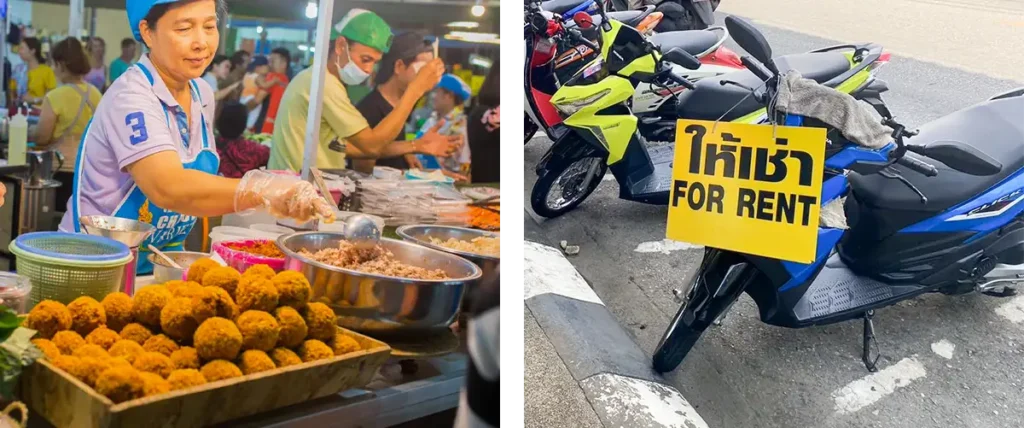
This is the part people either wildly overestimate (“Thailand is dirt cheap, I’ll live like a king for £500 a month”) or underestimate (“I’ll need to maintain my London cost of living”). The truth is somewhere in the middle, and it depends entirely on how you live.
Here are ballpark numbers based on real life — not fantasy budget travel:
You can spend less if you eat local exclusively and live further from the tourist areas. You can spend significantly more if you eat Western food every day and stay in the nicer hotel zones. The sweet spot for most nomads — decent apartment, coworking, mixed food — works out significantly cheaper than equivalent living in most Western cities.
One thing I see people not think through properly: Thailand does have income tax rules for long-term residents, and as of 2024 they’ve been tightening up on how foreign-source income is treated. I’m not a tax adviser, and this is genuinely worth checking with a professional if you’re staying for more than 180 days in a year. Don’t skip this bit. The Thai Revenue Department website has the official information.
Thailand doesn’t do daylight saving time, which is actually a blessing. UTC+7, all year round. No confusion, no twice-a-year recalculation. Here’s what that looks like in practice:
For European workers, this setup is almost unfairly good. You can get five or six solid hours of focused, deep work done in the morning before you need to be available to your team at all. For US West Coast workers — I’ll be honest, it’s genuinely tough if your whole team is in California. It’s doable but it’s not ideal.
If you’re doing video calls, do them from the coworking space rather than a café. The background noise difference is significant, the internet is more reliable, and you look like someone who has their life together rather than someone propped up next to a blender. Invest in a decent headset. The Phuket ambient noise — occasional scooters, roosters, distant Bangla Road — is charming in person and chaos on a client call.
Thailand Tip #3: Set your Google Calendar to the Bangkok time zone immediately on arrival. Don’t try to convert in your head. You will get it wrong, someone will be on a call alone, and it will be awkward.
Right. The bit everyone actually wants to talk about. You’ve got your visa sorted, you’ve found a proper place to work, and you’ve locked in your hours. Now what?
The honest answer is: almost anything. Phuket has beaches for every mood (Nai Harn if you want chilled and beautiful, Kata if you want surf and energy, Patong if you want everything at once). There’s decent hiking, incredible food markets, wake surfing, ATV, night markets with 39-baht Nutella pastries, coffee made from beans processed by a civet cat, and Bangla Road if you need to see it once.
My full rundown of what’s actually worth doing is in the Phuket expat activities guide — that covers beaches, markets, wake surfing, waterfalls, and more. If you want to know what’s happening events-wise while you’re here, the Phuket networking events and business summits guide is also worth a read — there’s more of a professional scene here than people realise.
The biggest mistake I see remote workers make is treating Phuket as a backdrop rather than an actual place. You’re not in an office with a nicer screensaver. Get on a motorbike. Get lost a bit. Eat things you can’t identify. That’s the point.

Yes, genuinely. The combination of good internet infrastructure, affordable cost of living, warm weather year-round, and a large existing community of expats and remote workers makes it one of the better long-term bases in Southeast Asia. The DTV visa has also made the legal side a lot more manageable than it used to be.
For short stays, most people enter on a visa exemption (30–60 days depending on nationality). For longer stays, the Destination Thailand Visa (DTV) is now the recommended route — it allows five years of multiple-entry stays of up to 180 days each, and it’s designed with remote workers in mind.
At a proper coworking space — genuinely excellent. Most spaces run fibre connections with 300 Mbps+ speeds, and the better ones are on gigabit. For video calls specifically, connection stability matters more than raw speed, and coworking spaces are set up for exactly this. Coffee shops are a much more mixed bag — always speed test before you commit to a call location.
Thailand Standard Time is UTC+7, all year — no daylight saving. For European workers, this is a brilliant setup. Mornings are yours for deep work before your team even wakes up.
A comfortable lifestyle — decent apartment, coworking membership, eating a mix of local and Western food, plus a motorbike — typically works out at 35,000–60,000 THB per month (roughly £800–£1,400 / $1,000–$1,700). You can do it cheaper; you can absolutely do it more expensively. It scales with your choices.
Yes. Petty theft exists here as it does everywhere, so be sensible — don’t leave your laptop unattended at a beach café, use a bag that zips properly on your scooter, and don’t leave expensive gear visible in a parked car. Basic common sense. Phuket is not a high-crime environment by any measure.
Absolutely. Denz has a dedicated desk and monthly membership options — check the desk rental options and the coworking prices page for current rates. Long-term members get a consistent spot, locker access, and skip the ‘is there a seat today’ stress.
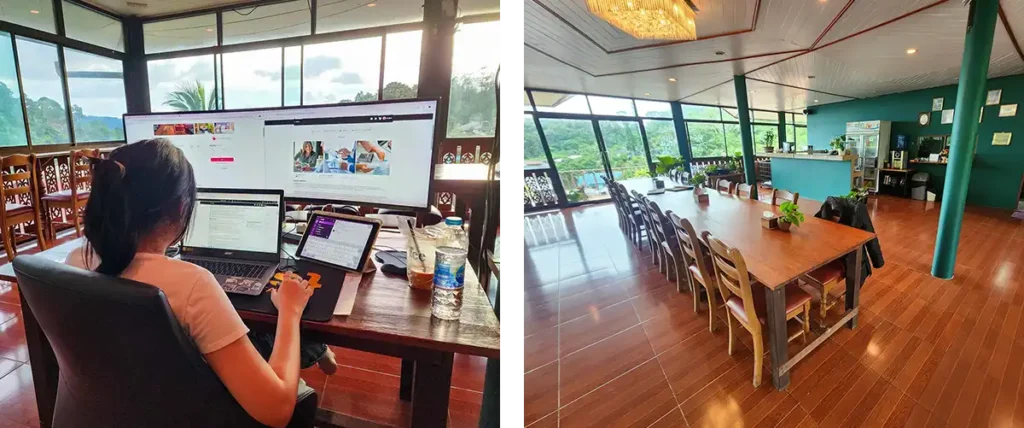
Look — working remotely in Phuket isn’t a gap-year fantasy or a retirement plan dressed up as productivity. It’s a genuinely viable way to work and live, and it’s been that way for years. The infrastructure is there. The community is real. The visa options have improved. And the quality of life, if you approach it properly, is hard to match anywhere in the world at this price point.
The people who struggle are usually the ones who arrive expecting everything to work exactly like home, or who think being in Phuket means they don’t have to actually work. Neither approach lasts. But the people who come in with a real setup — sorted visa, reliable workspace, structured hours, and enough flexibility to go swimming at 4pm — they tend to stay a lot longer than they planned.
Eight years later and I’m still on this hill. Make of that what you will.
If you’re heading to Phuket and want to see what a proper working setup looks like, Denz is up on Patong Hill — ten minutes from the beach, gigabit internet, real food, and the dogs. Day passes, monthly memberships, and a WorkStay option if you want to just land and have everything sorted. Come say hello.
See you out there.
JD Simpson (Jules) is the co-founder of Denz Coworking Café on Patong Hill, Phuket. He has been living on the island for over eight years with his wife and their two French bulldogs, Denzel and Coco. He documents life in Phuket on his YouTube channel Thailand Stuff — no sponsored content, no resort packages, just real life on the island.