We are closed and will be back open on the 5th October 2026



I’ve lived on this island for years, and the question I get asked more than any other is: when is the best time to visit Phuket? It sounds simple. It isn’t. The honest answer depends on what you’re after — beach weather, low prices, big events, or just a quiet trip where you don’t have to fight for a sunbed. Having run a coworking space up on Patong Hill and watched the island cycle through its seasons more times than I can count, I’ve got a few opinions on this.
Table of Contents
Phuket runs on two seasons: a dry high season from November through April, and a wetter low season that runs May through October. That’s the headline. But within those windows there are sweet spots, shoulder months that most tourists sleep on, and a couple of weeks each year that I’d personally avoid unless you love elbow-to-elbow crowds and peak pricing. I’m going to break all of it down for you — month by month, no fluff.
If you’re also thinking about making Phuket your base for remote work — which more and more people are doing under the Destination Thailand Visa (DTV) — then the time of year matters even more. I’ll cover that angle too.
Phuket sits in the Andaman Sea, which means it’s governed by the southwest monsoon. When the monsoon is on — roughly May to October — the west coast gets hammered with rain and the sea turns choppy. When it’s off, the skies clear, the sea flattens out, and every photo you take looks like a screensaver. That’s high season.
Here’s the thing though: the low season isn’t six months of non-stop rain. Most days you’ll still get a few hours of sunshine. The downpours are usually short and sharp, and then it clears up. It’s not Monsoon Season in the dramatic movie sense. The sea on the west coast (Patong, Kata, Karon) gets rough and red-flagged a lot, but the east coast and inland activities carry on just fine.
| Month | Season | Rainfall | Crowds | Prices |
| Nov – Apr | High (Dry) | Low | High | High |
| May – Jun | Shoulder | Moderate | Low | Lower |
| Jul – Aug | Low (Wet) | High | Very Low | Cheapest |
| Sep – Oct | Low (Wet) | Very High | Very Low | Cheapest |
| 🇹🇭 Thailand Tip: If the west-coast beaches are red-flagged during low season, head to Ao Por, Rawai, or Chalong — calmer waters on the east and south of the island. The beach clubs still operate, just quieter. |
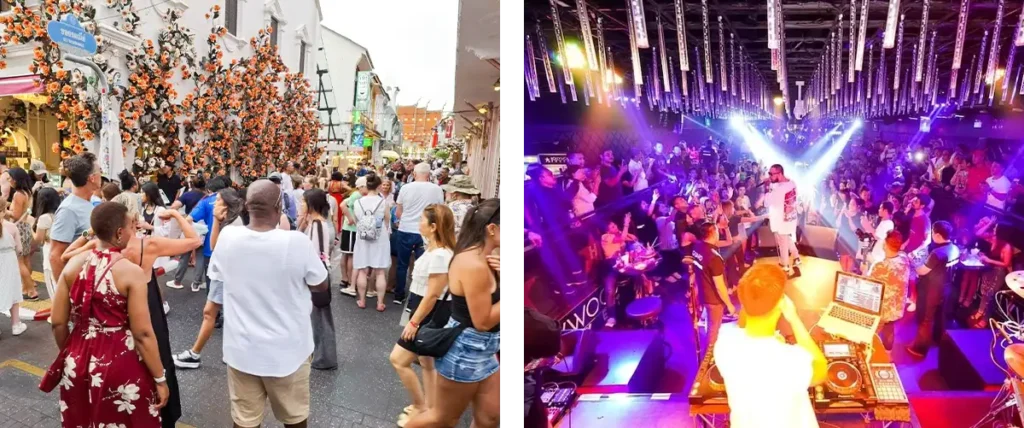
High season is when Phuket is, frankly, at its best — and its most hectic. Blue skies, calm Andaman waters, perfect beach conditions. Hotels fill up, Bangla Road gets rowdy, and every restaurant on Patong Beach has a queue. If you’ve booked a week’s holiday and want guaranteed sunshine, this is your window.
November is my personal favourite month on the island. The rains have stopped, the temperatures haven’t climbed to scorching yet (hovering around 28–30°C), and the main tourist wave is still building. Prices are lower than December and January, the beaches aren’t packed, and the sea is glassy. It’s the sweet spot that most people miss because they assume rainy season runs longer than it does.
December kicks the season into full swing. Christmas and New Year bring a serious surge in visitors — and prices. A hotel room that costs ฿2,000 in November can easily be ฿4,500 for the same dates over the Christmas period. Patong in particular gets rammed. If you’re coming in December, book everything early and budget for peak pricing across the board.
These two months are reliably the best weather on the island — hot, dry, and stable. January tends to be the single busiest month for international arrivals. If that doesn’t bother you, the diving is world-class, the snorkelling trips to the Similan Islands are running full steam, and Phuket Town’s Old Town district is buzzing.
February is still high season but slightly quieter than January. Chinese New Year falls in this window (dates shift year to year) and that brings a noticeable surge of visitors from mainland China and Hong Kong. Worth knowing if you’re planning day trips — certain areas get very crowded.
By March, temperatures start creeping up — we’re talking 32–35°C in the afternoon, sometimes more. It’s still dry and still good for the beach, but you’ll want to factor in the heat when planning activities. Outdoor stuff in the middle of the day gets uncomfortable fast.
April is where it gets interesting. Songkran — Thai New Year — falls in mid-April (13th–15th typically), and it is absolutely worth experiencing. The country collectively celebrates by throwing water at strangers. It sounds chaotic because it is, and it’s one of the best things about living here. That said, the week around Songkran is mobbed, and the heat can be brutal. Accommodation prices spike again. After Songkran, the rains start to build and high season winds down.
| 🇹🇭 Thailand Tip: Book accommodation for the Songkran period (April 12–16) at least 6–8 weeks in advance. Prices double and good guesthouses sell out completely. Same applies for the Christmas–New Year window. |
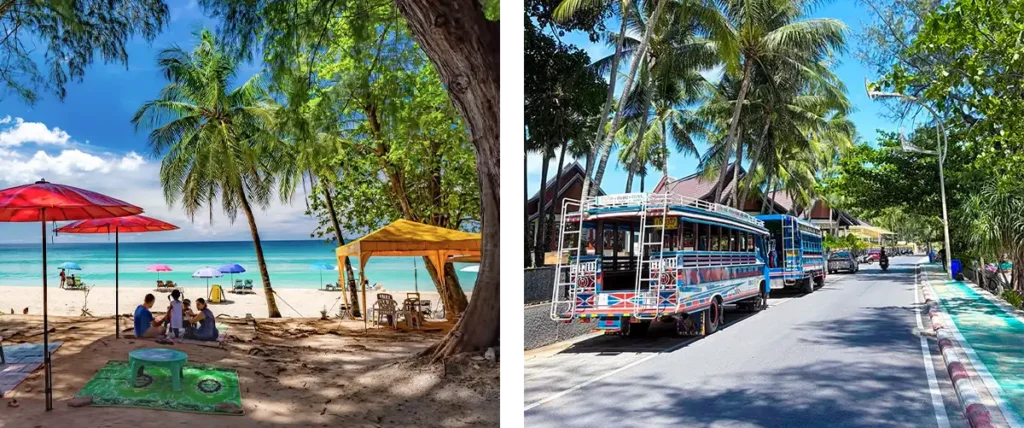
I’m going to be straight with you: if you have flexibility, the low season is worth seriously considering — especially the shoulder months of May, June, and even early October. Most tourists avoid it. That’s the point.
Prices drop substantially. A midrange hotel room that runs ฿3,000 in January might be ฿1,400 in June. Restaurants aren’t fighting for tables. The roads aren’t gridlocked. You can actually get a sunbed. The trade-off is that the west-coast beaches go red-flag and the sea gets rough, so if your entire trip depends on swimming at Patong or Kata, then yeah, this isn’t your window.
May marks the official start of low season but it’s one of the most underrated months on the island. You’ll get sunshine in the mornings more often than not. The rains are building but it’s not heavy yet — more like afternoon showers that clear by evening. Prices are noticeably lower and the crowds have thinned right out. For anyone on a budget or working remotely, May is excellent.
June follows the same pattern. Wetter than May, still manageable. The Phuket Vegetarian Festival prep doesn’t kick in until later in the year, but the island’s local scene is going — markets, restaurants, nightlife — minus the tourist hordes.
This is peak rainy season on paper, though in practice many days start sunny and the real action happens in heavy afternoon downpours. July and August are actually busy with European summer holiday travellers — particularly from Scandinavia and Germany — so the island isn’t entirely empty. The west coast beaches are red-flagged, but Phuket’s indoor scene (restaurants, night markets, nightlife) is going strong.
| 🇹🇭 Thailand Tip: Phuket’s east coast at Ao Por and Laem Hin areas can still be swimmable even during the wet season. And the Phi Phi Islands boat trips run when conditions allow — just check the day before. |
September is genuinely the rainiest month. I won’t sugarcoat it. Multi-day downpours happen. The island is at its quietest and its cheapest. There are still dry stretches and the island’s temples, food scene, and Old Town are entirely enjoyable — this just isn’t a beach holiday month.
October is the turnaround. The rains ease off noticeably in the second half of the month, and by late October the sea is calming down and the beaches are starting to be usable again. The Phuket Vegetarian Festival falls in October (dates follow the Chinese lunar calendar, so they shift each year) — it’s genuinely fascinating, intense, and unlike anything else.
November — Best overall month. Low crowds, great weather, reasonable prices.
December — Excellent weather, very high prices and crowds around Christmas/NYE. Book early.
January — Peak tourist month. Best diving conditions. Budget for high prices.
February — Still high season, slightly quieter. Watch for Chinese New Year surges.
March — Good weather, getting hot. Shoulder months approach.
April — Songkran is brilliant. Heat is intense. Prices spike mid-month.
May — Shoulder/low season begins. Great value. Mostly manageable weather.
June — Wetter but affordable. Excellent for remote workers.
July — Heavy rain possible but European travellers keep things alive.
August — Similar to July. Some beach access closed on west coast.
September — Rainiest month. Cheapest month. Not for beach holidays.
October — Transition month. Improves rapidly. Vegetarian Festival is unmissable.
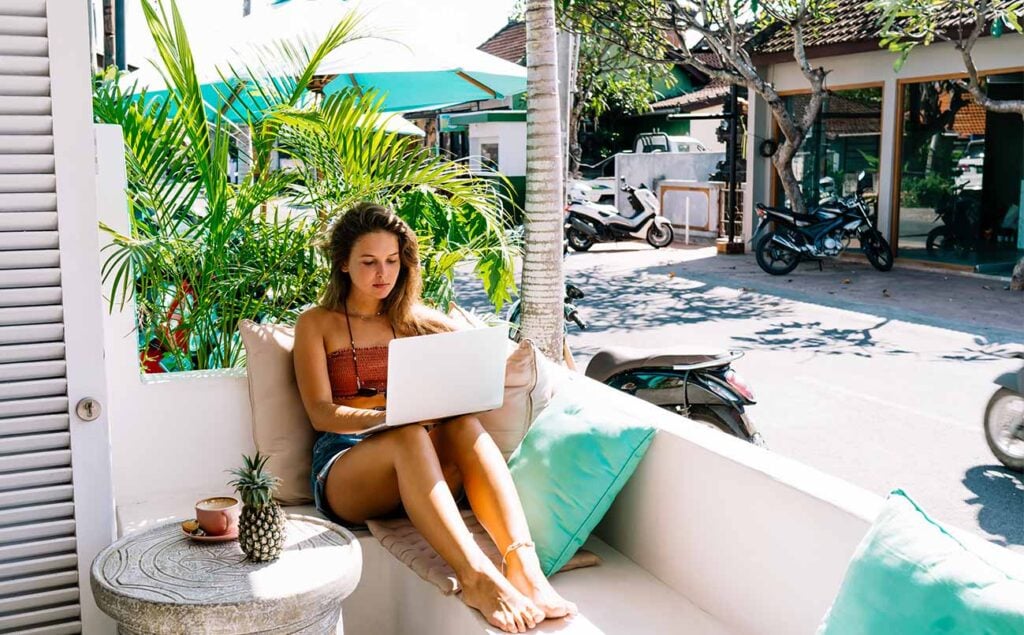
This section is basically me talking to myself five years ago. When you’re not on a fixed two-week holiday — when you’re actually living and working from here — the calculus on “best time to visit” changes completely.
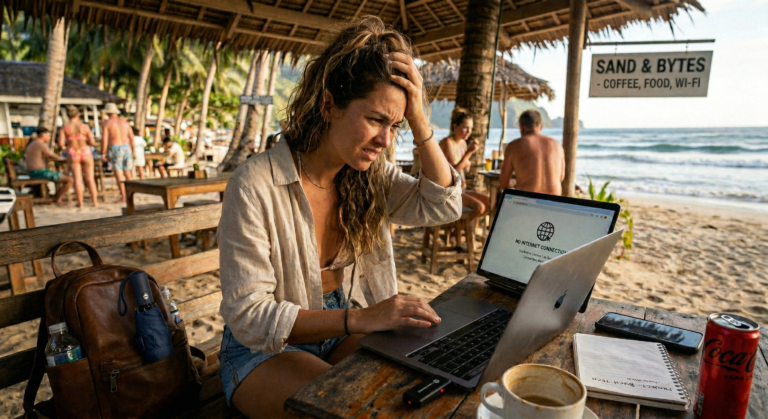
For remote workers, the low season is where it’s at. Lower accommodation costs mean your monthly expenses drop substantially. Fewer tourists means the coworking spaces and cafés are quieter and easier to book. The weather is imperfect but your work schedule means you’re indoors during peak rain hours anyway. And if you’re on a Destination Thailand Visa (DTV) — which allows a five-year multiple-entry stay of 180 days per visit — you’re almost certainly staying long enough to experience both seasons. Pick your arrival for November if you want to ease in gently. Arrive in May if you want to hit the ground running at low costs.
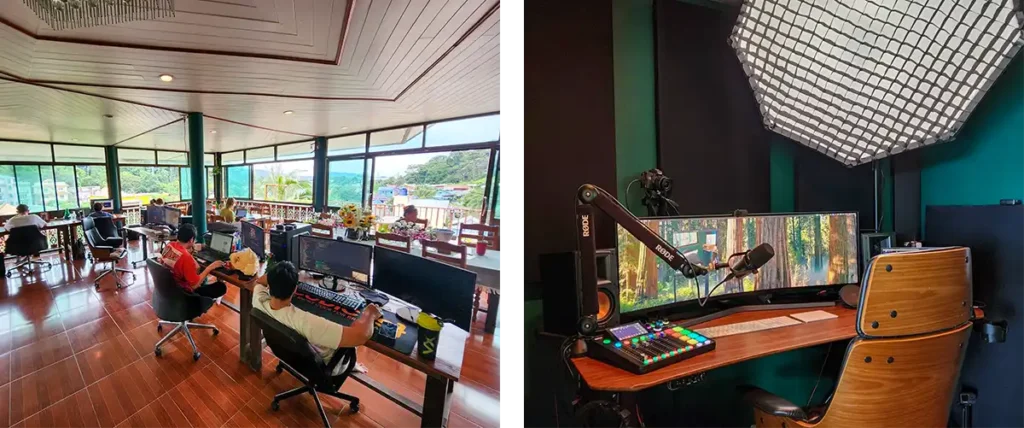
At Denz Coworking Café on Patong Hill, we’re busiest November through March — the classic expat influx that follows the dry season. From May onwards, things quiet down, and honestly I love it. The regulars are here, the coffee’s the same, the gigabit WiFi is the same, and you can actually get the window seat with the Patong Bay view without arriving at 8am.
If you’re scouting for a workspace from day one, check out the Denz coworking prices and desk rental options — we run daily, weekly, and monthly rates that work whether you’re here for a week or setting up for the season. And if you’re comparing options, this breakdown of coworking spaces vs. coffee shops in Phuket is worth a read before you commit.
| 🇹🇭 Thailand TipThe DTV (Destination Thailand Visa) is a five-year multiple-entry visa designed for remote workers and digital nomads. It gives you 180 days per entry, and you can extend once for another 180 days inside Thailand. It’s changed the game for long-stay expats. Full details in the DTV guide linked above. |
In the spirit of actually being useful, here are the situations I’d steer clear of:

November is the sweet spot — dry season has just started, the humidity has dropped from the wet season peak, prices are lower than December and January, and the beaches are quieter. If November doesn’t work, early December before the Christmas surge is a close second.
Yes, absolutely — with realistic expectations. The west-coast beaches will be off-limits much of the time, but the island’s food scene, night markets, temples, Phuket Old Town, and inland activities are all fully operational. And you’ll pay significantly less for accommodation. For digital nomads and remote workers, the rainy season is genuinely great value.
September is the cheapest month by a significant margin. Accommodation, flights, and tours all drop in price. October and early May are also great value. The trade-off is weather — the west coast gets rough and some beach activities are limited or stopped entirely.
April is a good time if you plan around Songkran (Thai New Year, mid-April) and book everything in advance. The festival is a genuinely incredible experience. Outside of that, April is hot — often hitting 35°C+ — and it’s the tail end of high season, so prices are still elevated. After mid-April, the rains begin to build.
November to April is peak diving season, with calm seas and excellent visibility around the Similan Islands and Phi Phi. The Similan Islands actually close to visitors from mid-May through October as a conservation measure. If diving is your primary reason for visiting, high season is non-negotiable.
Yes — and more and more people are doing exactly that, particularly under the Destination Thailand Visa (DTV). Living here year-round means experiencing both seasons, which I’d argue gives you the full picture of what Phuket actually is — not just the highlight reel.
The “best” time to visit Phuket isn’t a single answer — it’s a question of what you’re optimising for. Peak beach weather? November through February. Best value? May or June. Shoulder-season sweet spot? Late October or early November. Unmissable cultural experience? Songkran in April.
What I’d say to anyone on the fence about timing: don’t let the rainy season scare you off. Half the expats I know on this island first came here in June or July, took a chance on it, and never looked back. The rain passes. The island stays brilliant.
If you’re planning to stay a while and want a home base with decent internet and a view of the bay, you know where we are. Drop by Denz Coworking Café on Patong Hill — the coffee’s on and the WiFi won’t let you down, whatever month it is.
JD Simpson (Jules) is a long-term Phuket expat and the owner of Denz Coworking Café, a hilltop workspace on Patong Hill with panoramic views of Patong Bay. He runs the YouTube channel Thailand Stuff, where he covers life in Thailand for expats, remote workers, and long-term visitors. Jules has spent years navigating Thai visa rules, local infrastructure, and the rhythms of island life — and writes about all of it without the PR gloss.